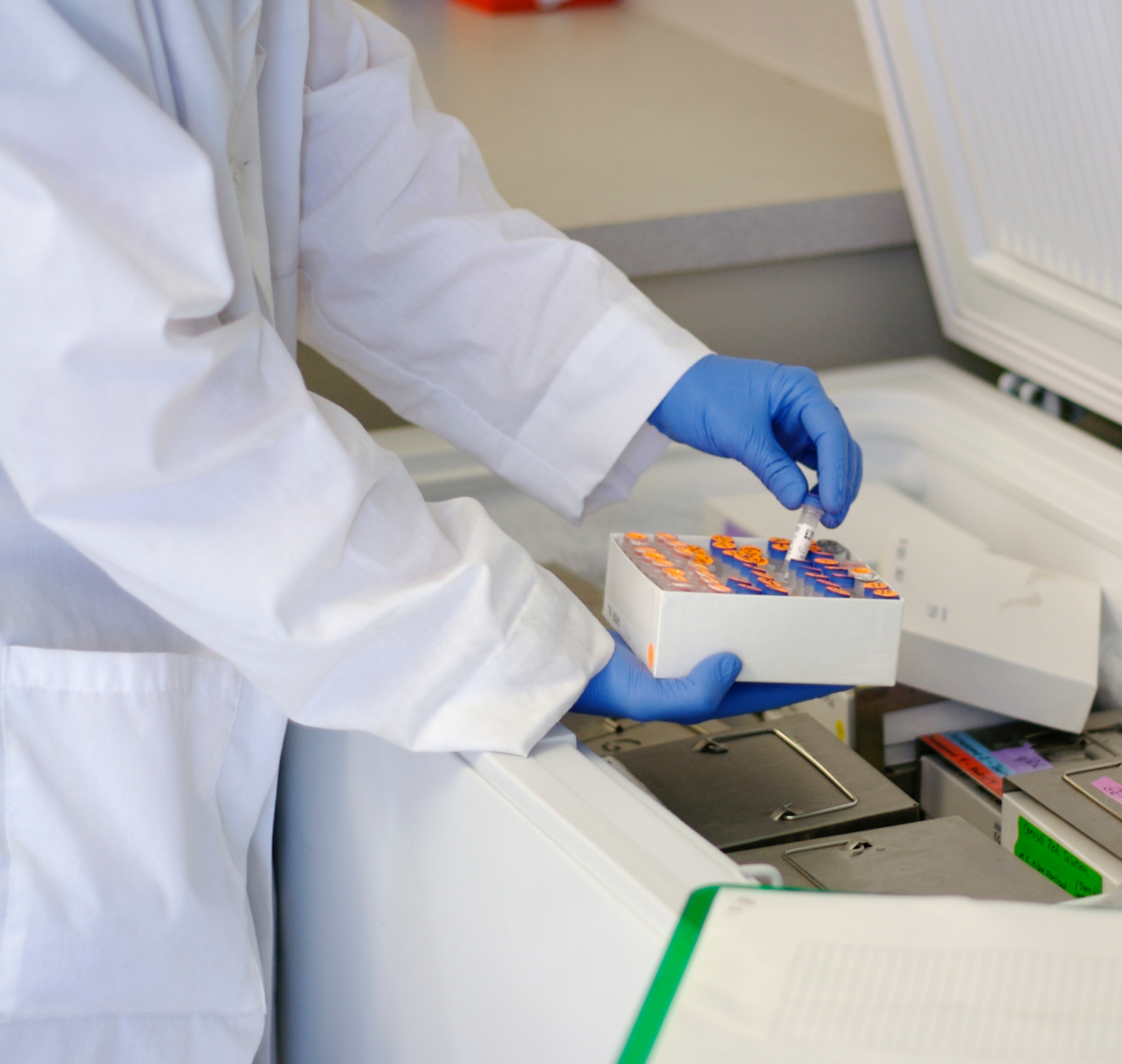
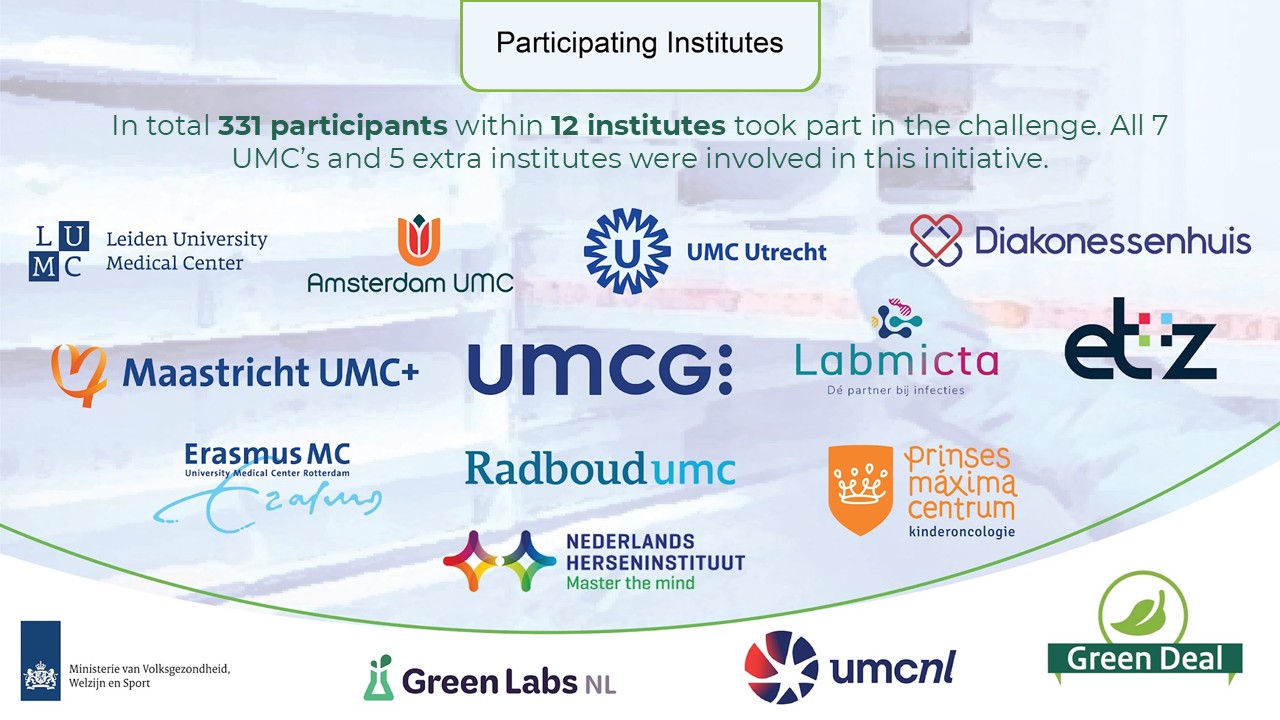
More than 50 departments and 300 professionals from hospitals and research institutes took part in the National Freezer Challenge in 2025. Smarter management and improved maintenance of laboratory freezers resulted in annual savings of €144,000 and a reduction of 176 tonnes of CO₂ emissions — equivalent to the emissions of approximately 269 average Dutch households.
Laboratory freezers are essential for research and healthcare, but they are also highly energy-intensive: a freezer operating at –70 or –80°C can easily consume as much electricity as two to three average Dutch households. For this reason, Green Labs NL and UMCNL, with support from the Dutch Ministry of Health, Welfare and Sport (VWS), organised the first National Freezer Challenge, inspired by an international initiative. The aim was to improve freezer management and storage practices without compromising quality or safety.
Impressive results
Together, participants cleared:
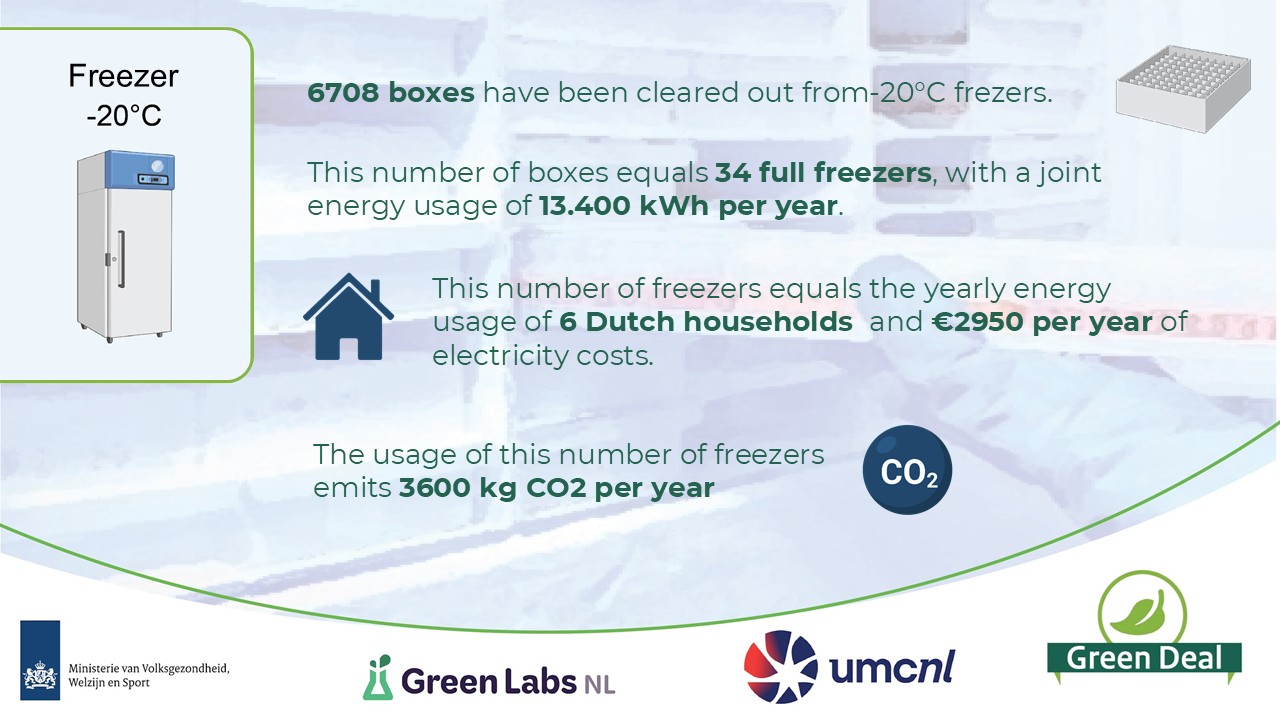
- 6,708 boxes from –20°C freezers
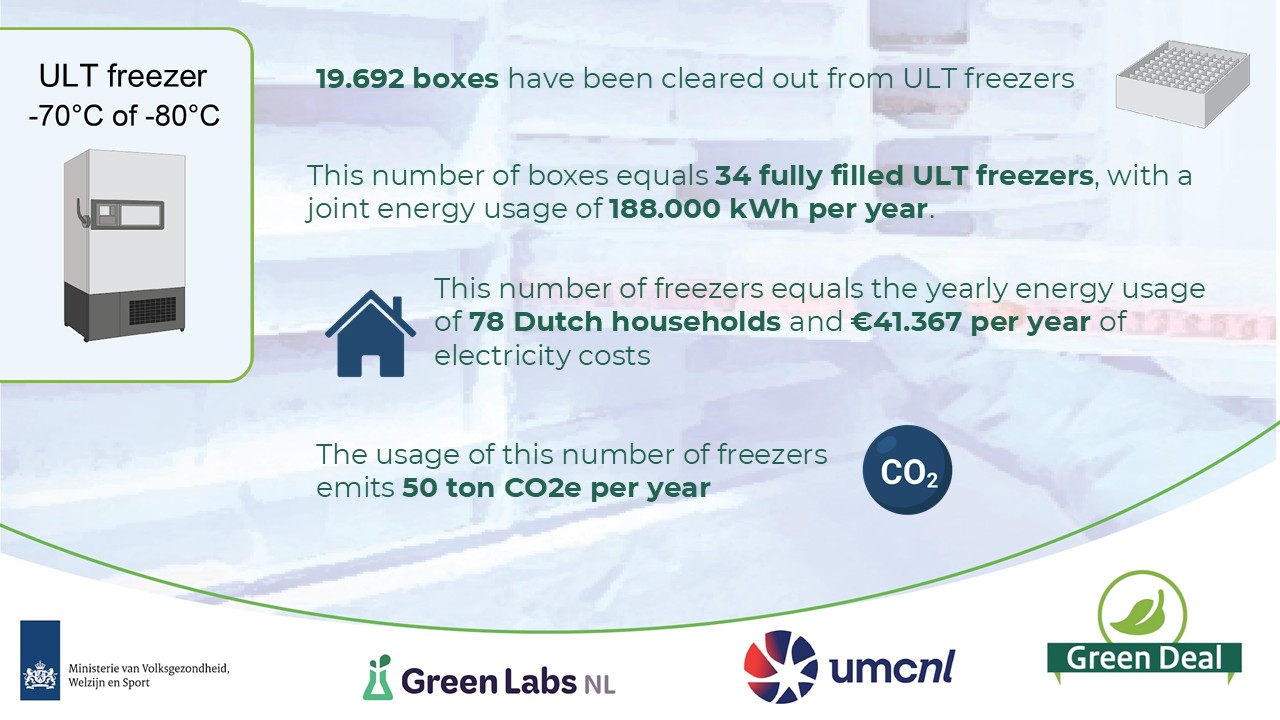
- 19,692 boxes from –80°C freezers (ULT freezers)
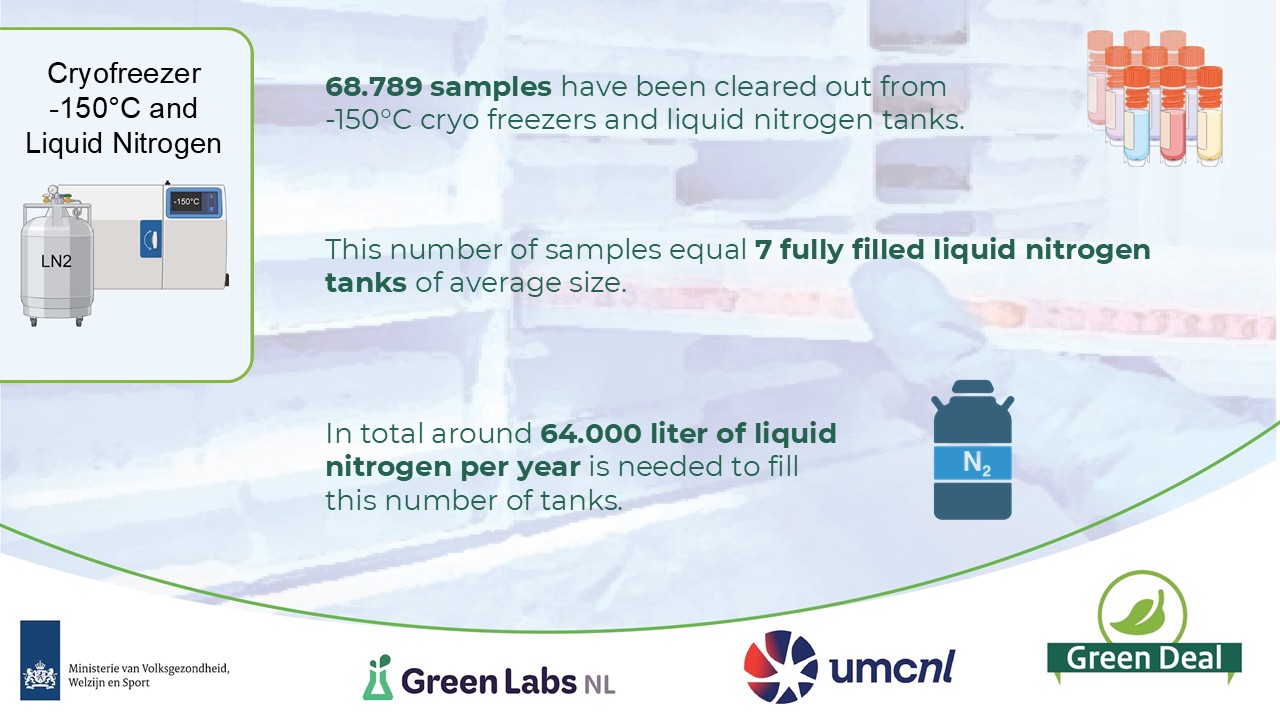
- 68,789 samples from –150°C/liquid nitrogen freezers (cryogenic freezers)
In total, the freed freezer space represents storage capacity for more than 2.4 million samples!
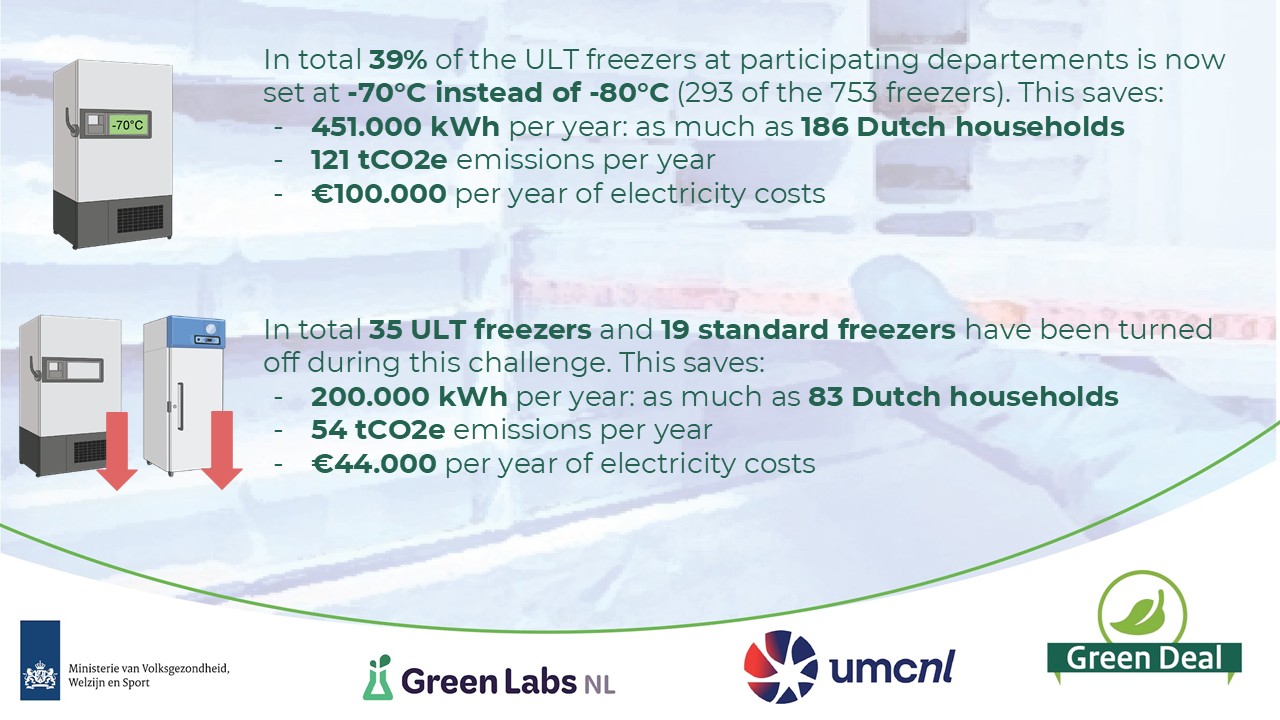
In addition, by applying more efficient storage approaches, such as centralisation, 19 –20°C freezers and 35 ULT freezers could be fully switched off. This alone results in annual savings of 200,000 kWh, €44,000 and 55 tonnes of CO₂ emissions — comparable to the energy use of around 83 average Dutch households.
Additional savings through temperature adjustment
Beyond shutting down freezers, further impact was achieved by adjusting ULT freezers from –80°C to –70°C. While this may appear to be a small change, it reduces electricity consumption by an average of 28% per freezer.
Across the participating departments, there are 753 ULT freezers in total. So far, 293 freezers (39%) have already been adjusted to –70°C, resulting in annual energy savings of 451,000 kWh.
This temperature change alone is estimated to save an additional €100,000 and reduce CO₂ emissions by 121 tonnes per year. A simple measure requiring no investment — yet delivering substantial sustainability benefits.
A notable observation
During the clean-up, the oldest samples were found to date back as far as 1977 in labs from UMC Utrecht and Erasmus MC, illustrating how long materials can remain stored when freezers are not regularly reviewed.
Working together for sustainable laboratories
The National Freezer Challenge demonstrates the potential to achieve impact when researchers, analysts and laboratory professionals collectively take responsibility for more sustainable freezer management. The approach is widely applicable and leads to lasting reductions in energy use, costs and CO₂ emissions.
More recent news

BME-free database launched by the 3Rs Centre Utrecht
Projects
Joep Sprangers
May 9, 2025

Van Walree funding opportunity for sustainability initiatives
FundingJoep Sprangers
May 9, 2025
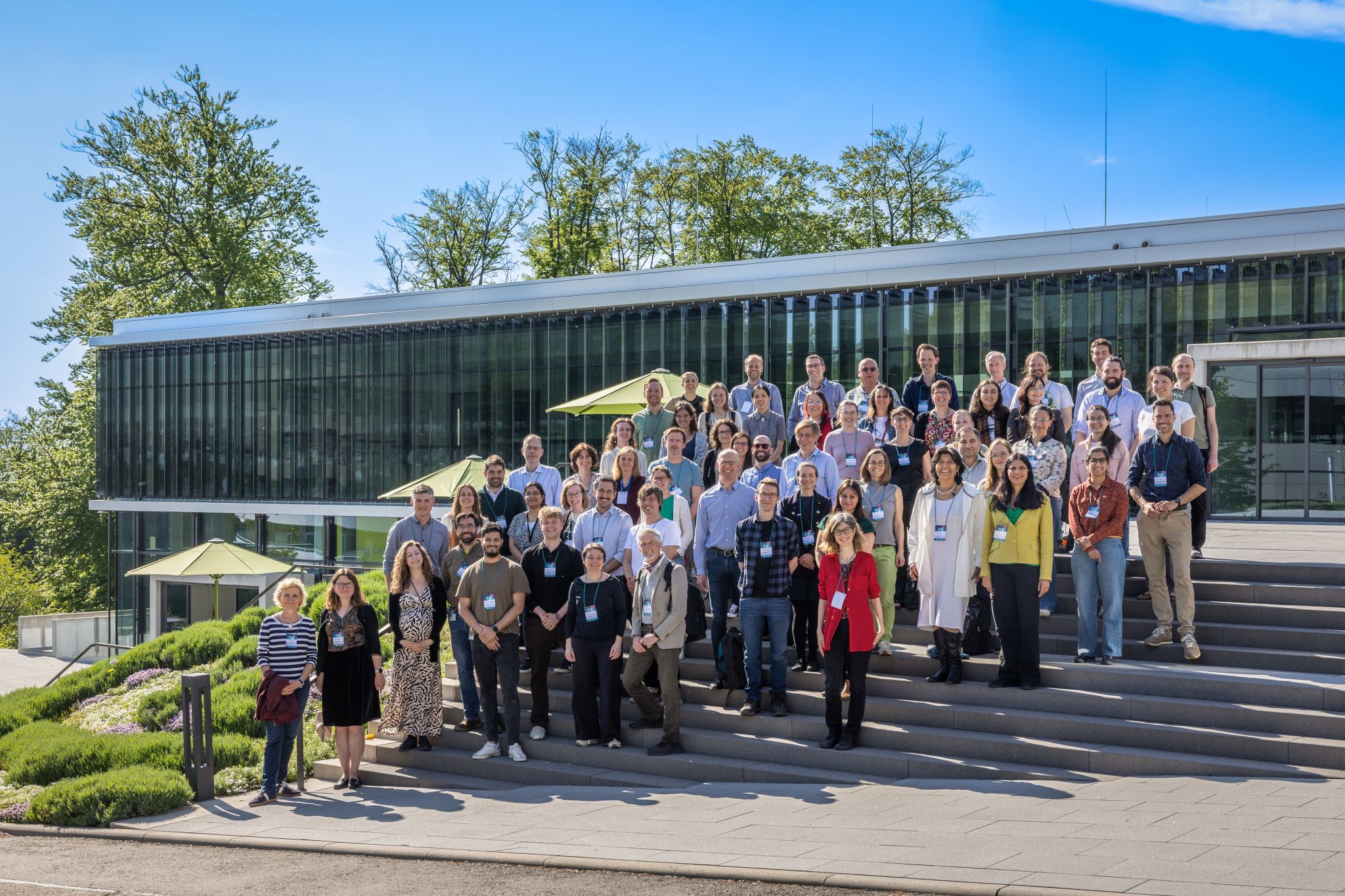
Updates from the SuRe Symposium 2025 in Heidelberg
EventsJoep Sprangers
May 9, 2025
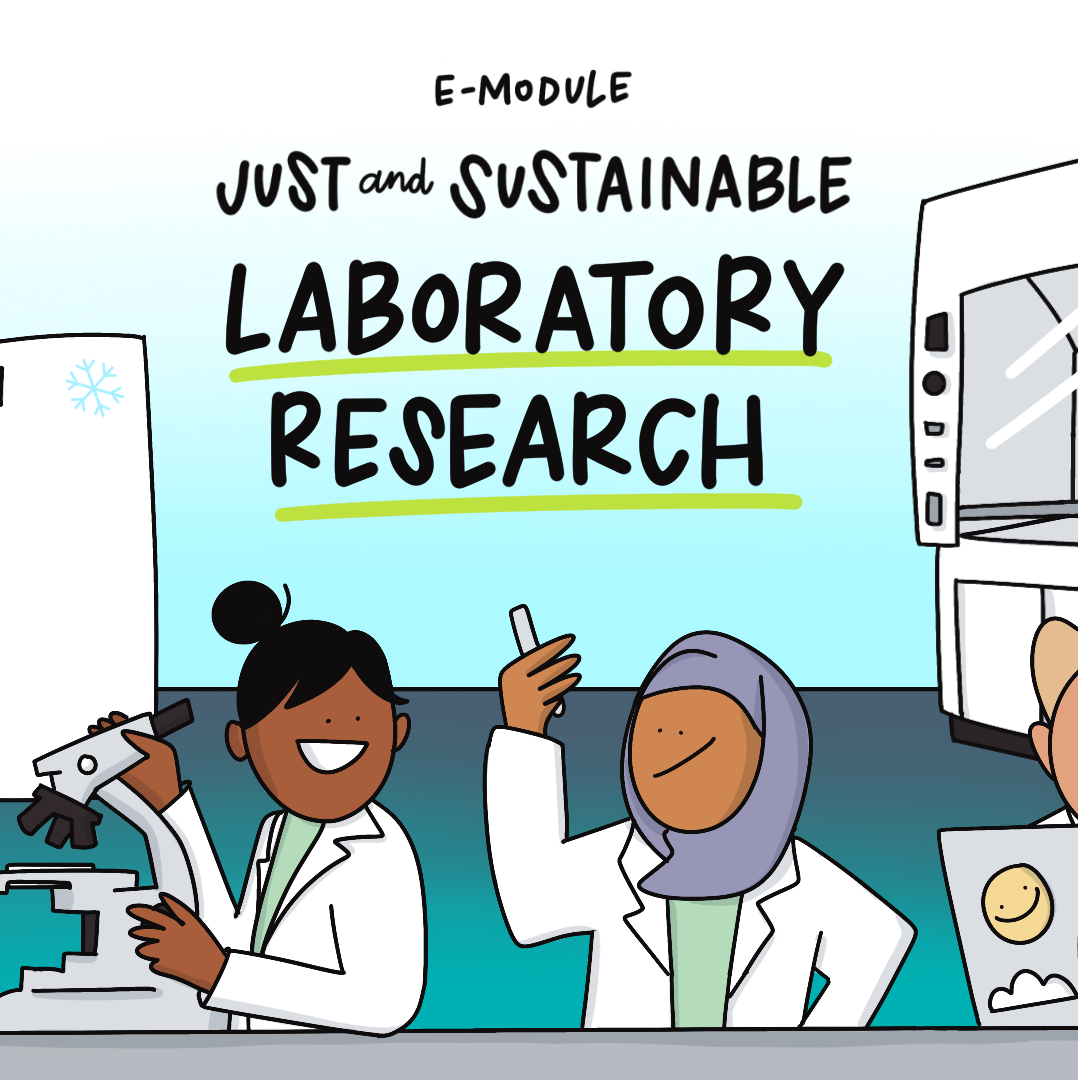
First E-module “Just and Sustainable Laboratory Practices” now available
EducationJoep Sprangers
November 17, 2024